


Safety eyes black 6-8-10 or 12mm
Select options
This product has multiple variants. The options may be chosen on the product page

Sille Slipover Junior

Sille Slipover Mini


Sock Yarn Universe
- Material 75% wool, 25% polyamide
- Weight 50 g
- Length approx. 210 metres
- Recommended stick 2.5-3 mm
- Gauge 28 sts x 42 rows = 10 x 10 cm
- Certifications Oeko-Tex Class l
- Yarn group Super Fine
- Machine wash at 40 degrees
Select options
This product has multiple variants. The options may be chosen on the product page

Soft Sensation
Select options
This product has multiple variants. The options may be chosen on the product page

Soft Sensation Lurex (mica)
Select options
This product has multiple variants. The options may be chosen on the product page

Sonja Sweater
Sonja Sweater is worked from the top down in stockinette stitch. First knit the upper back and then pick up stitches along the cast-on edge of the back for the shoulders. The shoulders are shaped with short rows. The front and back are joined under the armholes and the body is worked in the round on circular needles. Along the armholes, pick up stitches for the sleeves, which are worked in the round. Finally, stitches are picked up along the neck opening, where a folded rib edge is worked and worked down to the WS. Sonja Sweater is assembly-free.Make a swatch to find the needle size that gives the right gauge.Size guideSonja Sweater should have a room to move (positive ease) of approximately 30 cm in the smallest sizes but gradually smaller in the larger sizes. Sizes XXS (XS) S (M) L (XL) 2XL (3XL) 4XL (5XL) correspond to a chest measurement of 75-80 (80-85) 85-90 (90-95) 95-100 (100-110) 110-120 (120-130) 130-140 (140-150) cm. The measurements of the finished sweater are given on the front of the pattern. Note: These measurements only apply if the knitting gauge is followed. Measure yourself before you start knitting to assess which size will fit you best. For example, if you measure 90 cm around your chest (or the widest part of your body), you should knit a size S. A size S sweater is a size S. S sweater has a width of 120 cm and in this example would give you a room to move (positive ease) of 30 cm.Sizes: XXS (XS) S (M) L (XL) 2XL (3XL) 4XL (5XL)Span: 110 (115) 120 (124) 128 (134) 138 (144) 154 (160) cmLength: 58 (59) 60 (62) 64 (65) 66 (69) 72 (76) cmKnitting tension: 17 stitches x 24 rows in stockinette stitch on a 5 mm needle = 10 x 10 cmGuiding sticks: 5 mm circular needle (40, 60, 80 and/or 100 cm), 4.5 mm (80 or 100 cm), 4 mm circular needle (40 cm), 5 and 4.5 mm double-pointed needles

Sophie Scarf
The Sophie Scarf is worked back and forth in one piece in garter stitch with i-cord edges from tip to tip. The small size Sophie Scarf can reach once around the neck, while the large size can reach twice around the neck.Sizes: small (large)Length from tip to tip: Approx. 80 (102) cmWidth in the centre: 11 (13) cmKnitting tension: 22 stitches x 42 rows in garter stitch on 3.5 mm needles = 10 x 10 cmGuiding sticks: Round needle 3.5 mm (60 cm)

Sophie Shawl
The Sophie Shawl is worked back and forth in one piece in garter stitch with i-cord edges from tip to tip.Sizes: S (M) LLength from tip to tip: Approx. 170 (210) 240 cmWidth in the centre: Approx. 28 (34) 38 cmKnitting tension: 17 stitches x 30 rows in garter stitch on a 5 mm needle = 10 x 10 cmGuiding sticks: Round stick 5 mm (60 cm)

Stockholm Hue
Stockholm Hue is a thick and warm beanie inspired by the fashion scene in Stockholm. Stockholm Hue is knitted from the bottom up in rib. To achieve a nice tight rib in use, the size of the hat is adjusted with an internal elasticated band. This also ensures a good and permanent fit.The hat is worn so that it has a peak on the head.

Stockholm Slipover
Stockholm Slipover is worked from the top down. First the back, then the shoulders and front and finally the body. The Stockholm Slipover has a shoulder slope formed by using short rows in the shoulders for a good fit. Ribbed edges are knitted along the neck opening and armholes and finished with a tight Italian bind-off.

Stockholm Slipover Junior
Stockholm Slipover Junior is worked from the top down. First the back, then the shoulders and front and finally the body. The Stockholm Slipover has a shoulder slope formed by using short rows in the shoulders for a good fit. Ribbed edges are worked along the neck opening and armholes and finished with an Italian bind-off.

Stockholm Slipover Mini
Stockholm Slipover Mini is worked from the top down. First the back, then shoulders and front and finally the body. The Stockholm Slipover has a shoulder slope formed by using short rows in the shoulders for a good fit. Ribbed edges are worked along the neck opening and armholes and finished with an Italian bind-off.

Stockholm V-neck slipover
Stockholm Slipover V-neck has a V-neckline and is worked from the top down. First the back, then the shoulders and finally the body. The Stockholm Slipover V-neck has a shoulder slope formed by turning pins in the shoulders for a good fit. Ribbed edges are knitted along the V-neck and armholes and finished with a tight Italian bind-off.

Stockholm Sweater
Stockholm Sweater is worked top down in stockinette stitch in double stranded silk/mohair. First knit the upper back and then pick up stitches along the cast-on edge of the back for the shoulders. The shoulders are worked separately with short rows to form a wedge. The front and back are joined under the armholes and the body is worked in the round on circular needles. Along the armholes, pick up stitches for sleeves, which are worked in the round on double-pointed needles or with Magic Loop. Finally, stitches are picked up along the neck opening, where a ribbed edge is worked and then folded over and sewn to the wrong side. The Stockholm Sweater is assembly-free with the exception of the neck edge fold-over.Make a gauge swatch to find the needle size that gives the right gauge.

Stockholm V-Neck Sweater
Stockholm Sweater V-neck is worked top down in stockinette stitch in double strand silk mohair. First knit the upper back and then pick up stitches along the cast-on edge of the back for the shoulders. The shoulders are worked separately with short rows to form a wedge. The front and back are joined under the armholes and the body is worked in the round on circular needles. Along the armholes, pick up stitches for the sleeves, which are worked in the round on double-pointed needles or with Magic Loop. Finally, pick up stitches along the neck opening and work a ribbed edge with decorative decreases on the RS at the tip of the V-neck and corresponding increases on the WS. This neck edge is then folded over and sewn in place on the WS.The Stockholm Sweater V-neck is therefore seamless with the exception of the neck edge fold-over.


Storm Slipover Junior
Storm Slipover Junior is worked from the top down. First the back is worked and then stitches are picked up in the cast-on edge of the back to form the shoulders, which are joined at the front to form the front. The back and front are joined under the armhole to form the body, which is worked in the round on circular needles. Ribbed edges are then worked along the neck opening and armhole. Make a swatch to check which needle size you need to match the gauge. You can make a gauge swatch according to the diagram in the pattern.

Storm Sweater
The Storm Sweater is worked from the top down with textured knit. First the back is worked, shaped with short rows to form the shoulder slope. Then stitches are picked up for the shoulders, which are joined in front for the front. The front and back are joined under the armhole to form the body, which is worked straight down. The sleeves are worked in the round on double pointed needles or using the Magic Loop technique. A ribbed edge is worked at the neck, which is folded over and knitted down. The Storm Sweater is worked in a textured knit consisting of four different pattern segments.Make a swatch before you start to measure the gauge - note that the gauge must be correct in both height and width to match the measurements on the front. You can make a gauge swatch according to the diagram in the pattern.

Storm Sweater Baby
The Storm Sweater Baby is worked from the top down in textured knit. First the back is worked back and forth. Then stitches are picked up for the shoulders, which are joined in front for the front. The front and back are joined under the armhole to form the body, which is worked straight down. The sleeves are worked in the round on double-pointed needles or using the Magic Loop technique. A ribbed edge is worked at the neck, which is folded over and knitted down. The Storm Sweater Baby is worked in a textured knit consisting of four different pattern segments.Make a swatch before you start to measure the gauge - note that the gauge must be correct in both height and width for the measurements on the front to match. You can make a gauge swatch according to the diagram in the pattern.Sizes: 0-3 months (3-6 months) 6-9 months (9-12 months) 1-2 years (2-3 years)The sweater's upper width: 51 (57) 63 (63) 69 (69) cmLength: 26 (28) 31 (33) 34 (35) cm measured centre back excluding neck edgeKnitting tension: 28 stitches x 42 rows in textured knit on a 3 mm needle = 10 x 10 cm after washing and blockingGuiding sticks: 3 mm circular needle (40 or 60 cm), 2.5 mm circular needle (40 or 60 cm), 2.5 mm and 3 mm double-pointed needles

Storm Sweater Junior
The Storm Sweater Junior is worked from the top down in textured knit. First the back is worked back and forth. Then stitches are picked up for the shoulders, which are joined in front for the front. The front and back are joined under the armhole to form the body, which is worked straight down. The sleeves are worked in the round on double-pointed needles or using the Magic Loop technique. A ribbed edge is worked at the neck, which is folded over and knitted down. The Storm Sweater Junior is worked in a textured knit consisting of four different pattern segments.Make a swatch before you start to measure the gauge - note that the gauge must be correct in both height and width for the measurements on the front to be correct. You can make a gauge swatch according to the diagram in the pattern.Size guideThe Storm Sweater Junior should have a room to move (positive ease) of approximately 20-25 cm in relation to the chest measurement. Sizes 1-2 (2-3) 3-4 (4-5) 5-6 (6-7) 7-8 (8-9) 9-10 (10-11) 11-12 (12-14) years correspond to a chest measurement of approximately 53 (54) 56 (57) 59 (62) 64 (68) 72 (75) 78 (82) cm. The measurements of the finished sweater are given on the front of the pattern (note that these measurements only apply if the gauge is followed). For example, if you/recipient measures 59 cm around the chest, you should knit a size 5-6 years. A size 5-6 year old sweater has a width of 80 cm and will in this example provide room to move (positive ease) of 21 cm. If the measured chest measurement differs from the age guide, make sure to adjust the lengths to the person you are knitting for. The same applies if the child is shorter/taller than average.Sizes: 1-2 (2-3) 3-4 (4-5) 5-6 (6-7) 7-8 (8-9) 9-10 (10-11) 11-12 (12-14) yearsThe sweater's upper width: 72 (72) 80 (80) 80 (80) 80 (88) 88 (88) 96 (96) 104 (104) cmLength: 36 (38) 42 (43) 45 (48) 49 (50) 52 (53) 54 (56) cm measured centre back excluding neck edgeKnitting tension: 20 stitches x 32 rows in textured knit on 4 mm needles = 10 x 10 cm after washing and blockingGuiding sticks: 4 mm circular needle (60 or 80 cm), 3.5 mm circular needle (40, 60 or 80 cm), 3.5 mm and 4 mm double-pointed needles

Storm Sweater Man
Storm Sweater One is worked from the top down with textured knit. First the back is worked, shaped with short rows to form the shoulder slope. Then stitches are picked up for the shoulders, which are joined in front for the front. The front and back are joined under the armhole to form the body, which is worked straight down. The sleeves are worked in the round on double pointed needles or using the Magic Loop technique. A ribbed edge is worked at the neck, which is folded over and knitted down. Storm Sweater Man is knitted with a textured knit consisting of four different pattern segments.Make a swatch before you start to measure the gauge - note that the gauge must be correct in both height and width for the measurements on the front to match. You can make a gauge swatch according to the diagram in the pattern.

Stripes On Long Sweater
Stripes Along Sweater is worked from the bottom up in a k4, p4 rib pattern. The sleeves are worked by picking up stitches along the arm opening and working in the round on a small circular needle or double pointed needles. Finally, knit a double rib edge at the neck edge. This makes the Stripes Along Sweater almost assembly-free.As the Stripes On Long Sweater is knitted in rib, it will contract a lot as you knit it. To achieve the right measurements and knitting tension, it is therefore important that the sweater is steamed and/or washed before use. You can iron the sweater with a wet towel (do not iron directly on the sweater unless you have a special steam iron) while stretching it to the right measurements (use a tape measure! See front page for measurements). The sweater will stay in this shape if you do it thoroughly and let it dry flat. When washing the sweater, it should then be laid flat to dry, stretching it out to the correct measurements when wet.


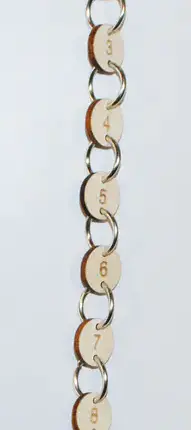
Knitting fish 6 rings
Knitting fish 8 rings

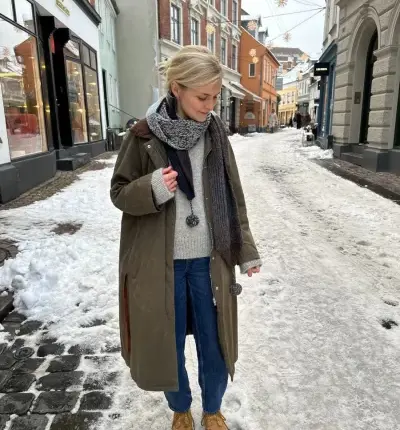
Structure Scarf
The Structure Scarf is worked partly in two-colour patent and partly in rib. The needle size is changed when switching between the two techniques so that the same gauge is maintained throughout. The scarf is worked from the centre out towards the ends so that it can be finished in the same way at both ends. The ends are finished with decreases in patent and a braided cord with a pompom.

Sunday Balaclava
Sunday Balaclava is worked from the top down in double ribbing, which transitions at the neck into a round yoke with ribbing and increases. First knit a square corresponding to the top of the head. Then pick up stitches on either side of this square and work the balaclava straight down and finally join under the chin to be worked in the round in rib with increases. Short rows are worked to raise the neck. Finally, a ribbed edge is worked at the face opening.

Sunday Balaclava Baby
Sunday Balaclava Baby is worked from the top down in double ribbing, which transitions at the neck into a round yoke with ribbing and increases. First knit a square corresponding to the top of the head. Then pick up stitches on either side of this square and work decreases along the face opening. The balaclava is then worked straight down and finally joined under the chin to be worked in the round in rib with increases. Short rows are worked to raise the neck. Finally, knit a rib edge at the face opening.

Sunday Cardigan
The Sunday Cardigan is worked top down in one strand of Inca Wool and two strands of silk mohair. The yoke is worked back and forth in ribbing with increases and button plackets/front edges are worked simultaneously. The body and sleeves are worked in stockinette stitch and both finished with a wide rib edge. The sleeves of the Sunday Cardigan are extra long. The neck edge is folded down and sewn to the wrong side. The buttonholes are made at the end (i.e. not knitted in as you go) by sewing around the edge with a slip stitch/buttonhole stitch.

Sunday Cardigan - Mohair Edition
Sunday Cardigan - Mohair Edition is worked from the top down, back and forth on the circular needle. The yoke consists of ribbing with built-in increases.Size guideThe Sunday Cardigan - Mohair Edition should have a room to move (positive ease) of approximately 15-20 cm in relation to your chest measurement. Sizes XS (S) M (L) XL (2XL) 3XL (4XL) 5XL correspond to chest measurements of approximately 80-85 (85-90) 90-95 (95-100) 100-110 (110-120) 120-130 (130-140) 140-150 cm. Measure yourself before you start knitting to assess which size will fit you best. For example, if you measure 93 cm around your chest, you should knit a size M. M. A size M has a width of 111 cm. M has a bust measurement of 111 cm and in this example would give you a room to move of 18 cm.Sizes: XS (S) M (L) XL (2XL) 3XL (4XL) 5XLThe width of the cardigan: 99 (108) 111 (116) 125 (136) 142 (154) 159 cmLength: 57 (58) 59 (59) 60 (62) 62 (64) 65 cmKnitting tension: 14 stitches x 18 rows in stockinette stitch on 7 mm needles = 10 x 10 cmGuiding sticks: 5 mm circular needle (60 or 80 cm), 6 mm circular needle (80 cm), 7 mm circular needle (40 and 80 cm), 6 mm double-pointed needles (unless working with Magic Loop technique)

Sunday Cardigan Junior
Sunday Cardigan Junior is worked from the top down. The yoke is worked back and forth in ribbing with increases and button plackets/front edges are worked simultaneously. The body and sleeves are worked in stockinette stitch and are both finished with a ribbed edge. The buttonholes are made at the end (i.e. not knitted in as you go) by sewing around the edge with buttonhole stitch.

Sunday Collar

Sunday Dress
Sunday Dress is worked from the top down. The yoke is worked in the round in rib with increases. The skirt and sleeves are worked in stockinette stitch and are both finished with a folded edge. The neck edge is folded down and sewn to the wrong side to form a drawstring for an elasticated waistband - this makes the dress easy to pull over the head and fits snugly when worn. The skirt of the Sunday Dress has a nice A-line shape.

Sunday Socks

Sunday Socks Junior

Sunday Suit
The Sunday Suit has a button fastening at the front and is worked from the top down. The yoke consists of rib with increases, while the rest of the suit is worked in stockinette stitch. The yoke and body are worked back and forth on the circular needle, while the sleeves and legs are worked in the round on double-pointed needles or using the Magic Loop technique. The Sunday Suit is assembly-free.

Sunday Sweater
The Sunday Sweater is worked from the top down. The yoke is worked in the round in rib with increases. The body and sleeves are worked in stockinette stitch and both finished with a ribbed edge. The sleeves of the Sunday Sweater are long and are worked with increases to increase towards the wrist. The neck edge is worked down when the yoke is worked - alternatively it can be folded down and sewn to the wrong side at the end.Size guideSunday Sweater should have a room to move (positive ease) of about 10-15 cm in relation to your chest measurement.Sizes XS (S) M (L) XL (2XL) 3XL correspond to a chest measurement of 80-85 (85-90) 90-95 (95-100) 100-110 (110-120) 120-130 cm. The measurements of the finished sweater are on the front of the pattern (note that these measurements only apply if the gauge is followed). Before you start knitting, measure your chest (or wherever you are widest on your body) to determine which size will fit you best. For example, if you measure 94 cm around your chest, you should knit size M. A size M sweater has a width of 106 cm. M sweater has a width of 106 cm and in this example will have a room for manoeuvre (positive ease) of 12 cm.Sizes: XS (S) M (L) XL (2XL) 3XLSpan: 97 (103) 106 (111) 120 (132) 140 cmLength: 55 (57) 59 (60) 65 (67) 68 cm (measured from the transition between neck edge and yoke)Knitting tension: 14 stitches x 20 rows in stockinette stitch on 7 mm needles = 10 x 10 cmGuiding sticks: 6 mm circular needle (40 and 80 cm), 7 mm circular needle (40, 60 and 80 and/or 100 cm), 5 and 7 mm double-pointed needles

Sunday Sweater - Mohair Edition
Sunday Sweater - Mohair Edition is worked from the top down. The neck edge is worked in ribbing and folded over. The yoke is worked in the round in rib with increases. The body and sleeves are worked in stockinette stitch and both finished with a rib edge. Sunday Sweater - Mohair Edition is assembly-free.

Sunday Sweater Junior
Sunday Sweater Junior is worked from the top down. The yoke is worked in the round in rib with increases. The body and sleeves are worked in stockinette stitch and are both finished with a ribbed edge. The neck edge is worked down when the yoke is worked - alternatively it can be folded down and sewn to the wrong side at the end.

Sunday Tee

Sunday Tee Junior

Sunday Tee Mini

Super Baby
Select options
This product has multiple variants. The options may be chosen on the product page


Super Kid Silk
- Material 76% mohair, 24% silk - Weight 25 g
- Length approx. 195 m - Recommended needle 4.5-5 mm
- Gauge 22 sts x 27 rows = 10 x 10 cm
- Certifications Oeko-Tex Class l - Yarn group Lace
- Washbasin
Select options
This product has multiple variants. The options may be chosen on the product page

Swedish Wool
Select options
This product has multiple variants. The options may be chosen on the product page

Sycamore Sweater
The Sycamore Sweater is worked from the top down, first back and forth on the circular needle to form the neckline and then in the round on the circular needle. The yoke is constructed by first working shoulder increases on the RS and WS. Then sleeve increases are worked, and finally a piece is worked with raglan increases. The sleeves are worked in the round on double pointed needles or using the Magic Loop technique. The pattern of the Sycamore Sweater is formed using short rows, specifically Japanese short rows.

Symfonie Tunisian crochet hook set 3.5-8 mm


Sewing kit (travel sewing kit)


Taormina
| Material | 36% alpaca, 49% polyacrylic, 15% polyamide |
| Weight | 200 g |
| Length | Approx. 700 metres |
| Recommended stick | 4.5 mm |
| Knitting tension | 18 sts x 24 rows = 10 x 10 cm |
Select options
This product has multiple variants. The options may be chosen on the product page

Technicolor Pillow
Technicolor Pillow is worked back and forth in loom knit. The back of the pillow is made of fabric. The front and back are sewn together at the end.The colour changes are described in detail in the pattern. Knit the pillow in your favourite colours and follow the descriptions of the colour transitions slavishly or use them as a guide and inspiration to create your own interpretation of the pillow.

Technicolor Purse
Technicolor Purse is worked in the round from the bottom up in stockinette stitch. The purse is worked in three strands and the smooth colour transitions are created by continuously switching between different colours of yarn. It is closed with a zip and a lining is sewn and fitted into the purse at the end. The pattern also includes sewing instructions for the lining.The colour changes are thoroughly described in the pattern. Knit the purse in your favourite colours and follow the descriptions of the colour transitions slavishly or use them as a guide and inspiration to create your own interpretation of the purse.Sizes: small (medium) large

Technicolor Shopper
The Technicolor Shopper is worked from the bottom up in stockinette stitch. The bag is worked in three strands and the smooth colour transitions are created by continuously switching between different colours of yarn. The colour changes are described in detail in the pattern. Knit the bag in your favourite colours and follow the description of the colour transitions slavishly or use them as a guide and inspiration to create your own interpretation of the bag

Technicolor Tote Bag
The Technicolor Tote Bag is worked in the round from the bottom up in stockinette stitch. The bag is worked in three strands and the smooth colour transitions are created by continuously switching between different yarn colours. The colour changes are described in detail in the pattern. Knit the bag in your favourite colours and follow the description of the colour transitions slavishly or use them as a guide and inspiration to create your own interpretation of the bag.